



Deuter · Augsburg, 1898
Deuter Backpacks
A day on the trail, a multi-day ski tour in the cold, a ridge at running pace, the bike commute through a downpour. Deuter backpacks sorted by use: a mesh back for hiking, a back that snow won't stick to for skiing, a vest for running. One pack per terrain; none of them does it all.
The day hike, the ski tour, the ridge run.
The day hike
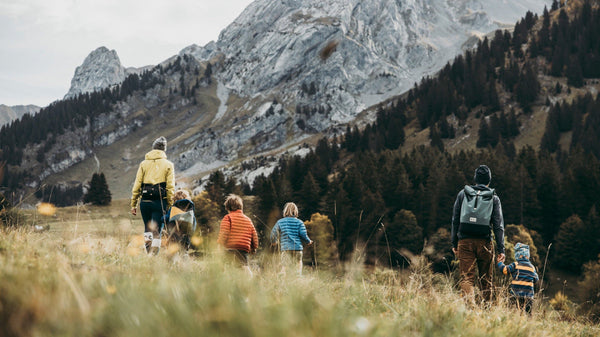
A big day on foot, with your jacket and lunch on your back.
The Trail weighs around a kilo and keeps air moving across your back with strips of foam. The Futura Pro 30 SL or 32 weighs half a kilo more for a proper mesh between your back and the pack, and a back length that adjusts in five positions. Which one? The Trail for walking light, the Futura Pro as soon as the load goes up or if you get a hot back.


25 L · 1,020 g · rain cover included
Built for day hikes: half a kilo lighter than a Futura Pro, with a removable rain cover.


23 L · 970 g · SL fit
The Trail in an SL fit: light, with carabiner loops on the hip belt and shoulder straps.


32 L · 1,580 g · adjustable back
A mesh holds the pack away from your back; the back length adjusts in five positions.


30 L · 1,500 g · SL fit
The Futura Pro mesh back, shorter, with shoulder straps and a hip belt shaped for women.

Hiking over several days
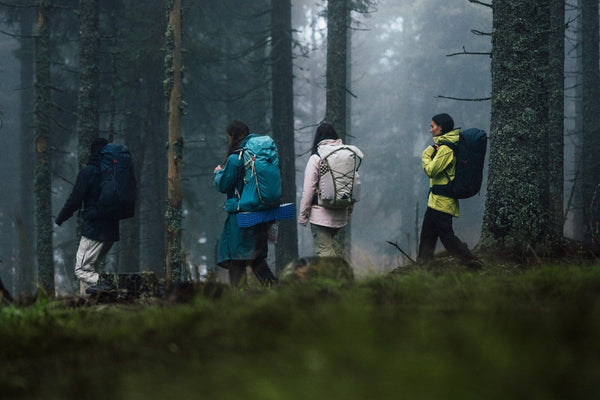
More litres on the same mesh back, for long days and multi-day routes.
Same Aircomfort back, same back length adjustable in five positions, same rain cover included; the SL versions have a shorter back. Which one? The 34 SL or the 36 for long, loaded days, the 38 SL or the 40 for several days on foot.

36 L · 1,590 g · adjustable back
Four litres more than the 32 for long days, with room for a warm jacket and lunch.

40 L · 1,620 g · adjustable back
The biggest in the family: several days on foot, with the load resting on your hips.


Ski touring over several days
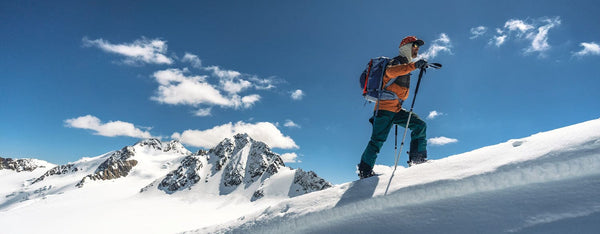
Several days on skis: the kit strapped outside, a pack that grows at the top.
The Freerider Pro gains 10 litres when you unroll its top and carries a snowboard or snowshoes on the front; the Freescape Tour has a height-adjustable lid that comes off. Both open from the back without unstrapping the skis, and snow won't stick to their back panels. Which one? The Freerider Pro for a board or snowshoes, the Freescape Tour for a lid that rises with the load; SL versions for a shorter back.


32 L · 1,130 g · removable lid
It opens from the back without unstrapping the skis; the lid rises with the load or comes off.

32 + 10 L · 1,100 g · snowboard on the front
The top unrolls for 10 more litres; a snowboard or snowshoes strap onto the front.


30 L · 1,090 g · SL fit
The Freescape Tour in an SL fit: height-adjustable lid, opens from the back.


30 + 10 L · 1,080 g · SL fit
The Freerider Pro in an SL fit: 10 more litres when you unroll the top, opens from the back.

Ski touring for the day
A day on skis, from a quick climb to a technical tour.
The Freescape Lite carries the rope, the ice axes and, in its front pocket, the shovel and probe. The Updays weighs nearly 300 g less and sticks to the essentials. Which one? The Freescape Lite for technical tours, the Updays for climbing fast; SL versions for a shorter back.

26 L · 1,000 g · avalanche safety pocket
Technical day tours: rope and ice axes strapped on, shovel and probe in the front pocket.


26 L · 710 g · back access
The lightest of our ski packs: removable lid, shovel compartment, back opening.

24 L · 950 g · SL fit
The Freescape Lite in an SL fit: rope, ice axes and skis outside, shovel and probe in the front pocket.


Rain, pack by pack
In the rain, it's one of four: nothing built in, a water-repellent fabric, a cover, or a closed roll-top.
Each pack is sorted by what protects it from the rain, from packs where your things go in a pouch to the roll-top that's waterproof once closed.
Not made for rain
No rain protection
In steady rain, water gets in through the seams and zips: anything that mustn't get wet goes in a pouch.
Water-repellent
Water-repellent main fabric
Water beads up on the fabric. In steady rain, it eventually gets through at the seams and zips.
Cover included
A rain cover comes with the pack
In a downpour, the pack goes under its cover. Without it, water eventually gets in through the seams and zips.
IPX4, once closed
Coated fabric, taped seams
With the roll-top rolled and closed, the contents are protected from rain and splashing water (IPX4 standard). Not from immersion.
Water-repellent doesn't mean waterproof: water beads up on the fabric, then eventually gets through at the seams and zips in steady rain. IPX4 covers rain and splashes, not immersion.
Running and climbing light
A pack worn like a vest, for running or climbing without it bouncing around.
The wide shoulder straps wrap round your chest and carry flasks and phone up front. Which one? The Ascender 7 for short trail runs; the Ascender 13 for longer outings, with a hydration reservoir up to 3 litres; the Vertrail 16 for fast ridge traverses, ice axe strapped on, waterproof in a downpour once the roll-top is closed.


13 L · 340 g · 3 L reservoir
The Ascender 7's vest with six litres more, for a full day's trail running in the mountains.

7 L · 315 g · 2 L reservoir
A running vest: flask and phone pockets on the shoulder straps, poles within reach.


16 L · 480 g · IPX4 when closed
Ice axe, poles and helmet strap on outside; with the roll-top closed, it's waterproof in a downpour.
Cycling and the city commute
To the office by bike, with the laptop protected even when it rains.
The Amager 25+5 is the only one of our Deuter packs to take a 15-inch laptop, in a padded sleeve. With the roll-top rolled and closed, it's waterproof against rain and splashes; unrolled, it gains 5 litres. Its ventilated back and snug shoulder straps keep the load close to your body on the corners.


25 + 5 L · 970 g · 15-inch laptop
With the roll-top closed, it's waterproof against rain and splashes; the laptop travels in a padded sleeve.

Long-term travel
Opens like a suitcase, carries like a backpack.
The Access 55 opens fully from the front, locks with a padlock and keeps your shoes separate. Its back system stows away for the hold: at 64 cm tall, it's over cabin size limits.


The brand, as Eiken sees it
From Bavarian mailbags to the Eiger North Face.
In 1898, Hans Deuter opens a canvas workshop in Augsburg, Bavaria, and is soon sewing mailbags for the Royal Bavarian Post. In 1938, the first ascent of the Eiger North Face is made with a Deuter pack on the climber's back. In 1984 comes Aircomfort, the first tensioned mesh back, taken up by the Futura series in 1999. Deuter now belongs to the Schwan-Stabilo group and is based in Gersthofen; its backpacks are sewn in Vietnam, by the same partner since the early 1990s.
Deuter has been a member of Fair Wear since 2011, with Leader status (95 out of 100 at its latest assessment, published in January 2026): Fair Wear assesses working conditions in the factories brands use, and doesn't certify products. Deuter has been calculating the emissions of its operations and products with ClimatePartner since 2020.
Deuter guarantees its packs for 2 years against defects in materials and workmanship, then repairs them at a shared cost. For a pack bought from Eiken, the claim goes through us. On top of that comes the 2-year legal guarantee of conformity.
Eiken's take
- Why we chose it
- For hiking, the Futura Pro: its mesh back keeps air moving between you and the load. For multi-day ski touring, the Freescape Tour 32. For running in the mountains, the Ascender 13.
- Worth knowing
- The Futura Pro's mesh comes at a price in weight: 1,580 g for the 32, over half a kilo more than the Trail 25. For walking light on a day hike, the Trail is enough.
- Who it's for
- Anyone who spends their weekends in the mountains, on foot, on skis or running, and wants a pack built for that one use, sized to their back.
Baptiste, Eiken
Questions
Before you choose a Deuter backpack.
Which Deuter backpack for hiking?
For a day out, the Trail 25 if you walk light, the Futura Pro 32 if the load goes up or you get a hot back: its mesh holds the pack away from you. For long days and multi-day trips, the Futura Pro 36 or 40. If you have a shorter back, go for the SL version: Trail 23 SL, Futura Pro 30 SL, 34 SL or 38 SL.
What does SL stand for on a Deuter pack?
SL stands for Slim Line: a shorter back length, with shoulder straps and a hip belt shaped to a woman's build. Available in SL: the Futura Pro 30 SL, 34 SL and 38 SL, the Trail 23 SL, the Freerider Pro 30+10 SL, the Freescape Tour 30 SL, the Freescape Lite 24 SL and the Updays 24 SL.
Futura Pro 32, 36 or 40: which one?
The same mesh back in three sizes. The 32 for a big day out, the 36 for long, loaded outings, the 40 for several days on foot; all three carry 6 to 10 kg and adjust their back length in five positions. The 30 SL, 34 SL and 38 SL are their short-back versions.
Which Deuter backpacks are waterproof?
The Amager 25+5 and the Vertrail 16, once the roll-top is rolled and closed: coated fabric, taped seams and coated zips protect them from rain and splashes (IPX4 standard), not from immersion. The Futura Pro and Trail packs come with a rain cover; the Freescape fabric is water-repellent. For the rest, in steady rain, anything that mustn't get wet goes in a pouch.
Which Deuter pack for ski touring?
For several days, the Freerider Pro 32+10, which gains 10 litres when you unroll its top and carries a snowboard on the front, or the Freescape Tour 32, with its height-adjustable lid; both open from the back without unstrapping the skis. For the day, the Freescape Lite 26 for technical tours, or the Updays 26, at 710 g, for climbing fast. Each one comes in an SL version.
What guarantee comes with a Deuter pack?
Deuter guarantees its packs for 2 years against defects in materials and workmanship, then repairs them at a shared cost; for a pack bought from Eiken, you write to us and we pass it on. On top of that comes the 2-year legal guarantee of conformity, and you have 30 days to change your mind.