



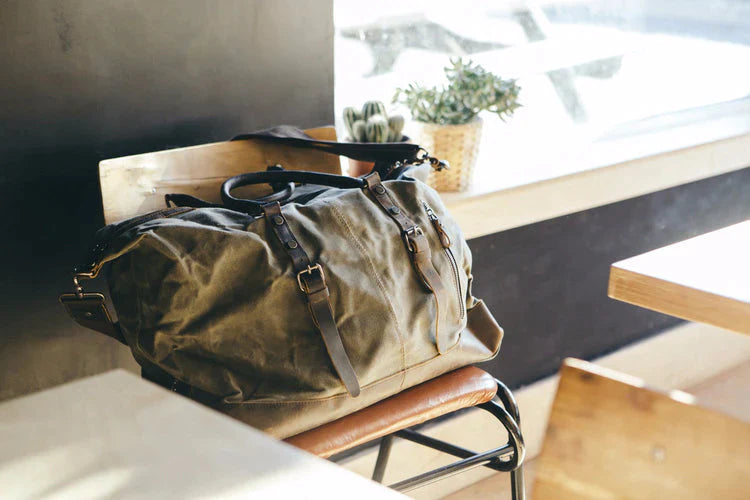


Canvas Duffle Bags for Weekends and Vintage-Inspired Travel
A train to catch, a weekend away, a few essentials packed at the last minute: our canvas duffle bags bring a vintage travel aesthetic to everyday departures. Explore soft holdalls, weekend bags and larger travel formats, with canvas textures, leather details and practical carrying options that vary by model.
Start with what you need to pack and how you prefer to carry it. A wide-opening weekender makes clothes easy to reach; a compact duffle can double as a gym bag; a larger holdall gives you room for longer trips. Sea bags and military-inspired designs are part of the selection, alongside classic travel bags. For a different finish, explore our leather duffle bags; for two-strap carrying, see our canvas backpacks.
Pick Your Duffle by the Job
Duffles do not specialise on their own; the litres and the shape do it for them. Four jobs cover this collection, and each has a canvas duffle bag that was built for it, with the volumes and empty weights taken straight from the product pages.
The weekend classic
Thirty-three to 36 litres is the two-nights-and-back format, soft enough to squash into an overhead rack. The MAÏKA (35 L, 1.5 kg) and the NUNAVUT (33.5 L, 1.7 kg) split the job between them, both in waxed cotton with leather trim; the NUNAVUT is simply the one named after its finish. Between the two, decide by colour and cut. Both fold soft into a boot or a locker when empty, which is half the reason to own one.
The military line
This is where the collection shows its papers. The anchor is the KODIAK (47 L, 1 kg), the sea bag shape the navy made famous: top-loading, cylindrical, near weightless for its size. The BEAUVAL (40 L, 1.3 kg) is its army cousin with a full-length opening for people who refuse to fish. The AKLAVIK (14.5 L, 0.5 kg) is the day version of the same idea, and light enough to pack flat inside another bag and come home full. None of the three pretends to organisation: one big chamber, the way kit bags always were. And if the heritage pull wants two straps instead of one, the military canvas backpack is the same family, worn on the back.
Gym and training
A gym bag lives a harder life than a travel bag: daily loading, damp kit, floor time. The KAORI (31 L, 1.35 kg) and the bigger KOYUK (36 L, 1.5 kg) take that schedule in canvas that airs out faster than synthetic liners and looks better at the coffee stop afterwards. Air them open at home; wet kit sealed overnight is the one abuse the fabric holds against you.
The big hauls
Past 40 litres, a duffle becomes logistics. The NEMASKA (56 L, 1.7 kg) is the largest canvas bag we sell, and it still weighs less than an empty cabin trolley. Kit for a full week, one person's move between flats, the family's beach day: it swallows the lot and hangs flat on a hook when it is done, which no suitcase has ever managed. The OAXAKA (45 L) and INUVIK (40 L) sit just under it for loads that are merely large.
Between two sizes, think about the trip home: a canvas duffle packed loose rides fine, but the honest rule from the military line applies everywhere: one big chamber rewards people who roll and stack, and punishes people who toss. Roll, and a 40-litre bag holds a week; toss, and it holds a mystery.
Cotton Duck: Heavy Cloth, Light Bags
The fabric here is cotton duck, the tight plain weave that working gear has used for two centuries, chosen for a simple ratio: strength per gram. It takes abrasion the way denim does, frays never and fades slowly, and because the cloth itself is the structure, there is no frame, no panels, no lining system adding weight. That is how a 47-litre bag lands at one kilo. Most of the line carries a wax load in the weave that beads rain; where the cloth is left dry it breathes more and weighs less, and each product page states its finish. Straps and stress points are backed with leather or doubled stitching, and the shapes are deliberately simple, because a duffle with nothing to break is a duffle that does not break. Zips run the full mouth on the travel formats; the sea bags cinch at the top, weather out, hands free.
Aging is part of the contract. Canvas softens where you grab it, creases where you fold it and takes on the colour of its life; a surplus-store kit bag from 1980 is the proof the look works. Ours start that journey new, with stitching that has not done forty years of service first. And the wax renews: any model takes a fresh coat with a tin and an afternoon, the rare upgrade you can apply at your kitchen table. The full story of the cloth is in our canvas and waxed canvas guide, and when yours needs a wash, how to clean canvas covers it in ten minutes.
14 to 56 Litres, Translated
Fourteen and a half litres, the AKLAVIK, is one day of kit or the spare bag that lives inside your luggage. Thirty-one to 36 litres covers the gym rotation and the two-night weekend. Forty-seven, the KODIAK, is a week packed the military way, rolled tight and stacked. Fifty-six, the NEMASKA, is the household's cargo hold, the bag that gets volunteered for everyone else's overflow. A canvas duffle bag has no frame to argue with, so within reason the litres flex with the packing; the number that does not flex is the weight of the empty bag, and here it barely registers. If you have carried a rigid 56-litre case up a stairwell, the NEMASKA at 1.7 kg will feel like a practical joke in your favour.
Who Answers for These Bags
We do, and in public: over 25,000 orders shipped, with the reviews on Trustpilot and our reviews page for anyone to read. Delivery at the standard rate is free worldwide, shipped from France. Warranty runs 2 years on seams, straps and hardware, repair first, replacement if repair loses. Canvas favours that policy: a torn panel is a patch, and patches have always belonged on these bags anyway. Thirty days to rethink the size, and the grid above always shows the current prices. For a bag whose whole argument is decades of service, the paperwork matters more than usual, and ours is short.
FAQ
Duffle, duffel, sea bag: which is which?
Duffle and duffel are the same word, split by an ocean: British English prefers the first, American the second, and both trace back to the Belgian town of Duffel that wove the original cloth. A sea bag is the specific navy version: cylindrical, top-loading, carried over one shoulder. Our KODIAK is a sea bag; the rest are duffles in the broad sense.
Is canvas strong enough for heavy use?
It is the fabric armies chose for exactly that question, and the weave here is heavy cotton duck backed with leather or doubled stitching at the stress points. What kills soft bags is sharp overloading at the seams, so pack dense loads low and even. Under normal violence, gym floors, train racks, roof boxes, canvas outlives most of the things carried in it.
Do these work as gym bags?
The KAORI and KOYUK were shaped for it, and any of the 31-to-36-litre bags will serve. Cotton breathes better than coated synthetics, which matters with damp kit, but the same honesty applies: air the bag open when you get home. Sealed wet overnight, any natural fabric will hold the smell against you.
Can a canvas duffle go as cabin luggage?
The under-40-litre formats usually can, and soft bags compress into gate sizers in a way hard shells cannot. The AKLAVIK passes everywhere; the weekenders depend on how full you pack them. As with every bag we sell: the exact dimensions are on each product page, and your airline's rules beat anything written here.
Can I machine-wash a canvas duffle?
Hand-cleaning is the rule here: most of the line is waxed cotton, and hot machine water strips the wax, on top of what it does to the leather trim. Brush dry dirt off first, then a damp cloth handles most of the rest. The step-by-step is in our canvas cleaning guide linked above.
Why not just buy army surplus?
A fair question, and surplus is a fine way to buy the look for less. What you give up: the previous forty years of the bag's life, hardware you cannot date, and any recourse when a seam lets go. Ours are the same pattern cut new, with a 2-year warranty and 30-day returns behind them. Different bets; we make the second one.
Are these men's bags?
The heritage is military and the styling reads that way, but the bags themselves are unisex and the straps adjust across builds. The MAÏKA and the smaller formats are carried by everyone; the big haulers simply ask for whoever is strongest that day. Volume, again, is the real gender of a duffle.
Waxed or dry canvas: which should I take?
Most of this line ships waxed: the finish beads rain and darkens into a patina, at the cost of a little weight and an occasional re-wax. Dry canvas is lighter and breathes more, but soaks in a real downpour. The finish is stated on each product page; commuting and wet climates argue for wax, hot-country travel for dry.
Before You Choose
Three reads to finish the job. The holdall guide tells the British half of this bag's story, kit bag included. The weekender and overnight guide maps formats to trip lengths with the maths shown. And how to pack light for two weeks is the article that makes a 35-litre bag feel roomy. Then load yours badly, carry it anyway, and let it start earning the creases: nobody ever kept a kit bag pristine, and that was never the point of one. The point was that it came back, year after year, from wherever it was thrown. Prefer a recycled, technical build? See our recycled travel duffels.